Quick answer: The most popular concrete coating finishes are epoxy, polyaspartic, metallic, flake, and stained concrete. Each offers a different balance of look, install approach, and cost. Epoxy and polyaspartic are common picks for garages and high-traffic areas; metallic and stained finishes are more decorative options for living spaces and patios.
Concrete floors don't have to look industrial or plain. With the right finish, you can transform a dull slab into a surface with real design presence. Whether you're updating a garage, patio, or commercial space, the coating you choose shapes how it looks and feels.
As a concrete coating company in Phoenix, AZ, Cardinal Concrete has installed a wide range of finish styles across the Valley. This guide walks through the most popular concrete coating finishes and styles, what makes each one distinctive, and how to decide which is right for your project.
Key Takeaways
- The most popular concrete coating finishes are epoxy, polyaspartic, metallic, flake, and stained concrete — each suited to different needs and budgets.
- Polyaspartic and epoxy are common picks for garages and high-traffic areas; metallic and stained finishes shine in living spaces and patios.
- Working with an experienced concrete coating company in Phoenix, AZ means the finish is matched to your space and installed correctly.
What are the most popular concrete coating finishes?
Choosing a finish comes down to balancing looks, install specifics, and budget. Here are the styles homeowners and businesses request most often.
Epoxy coatings
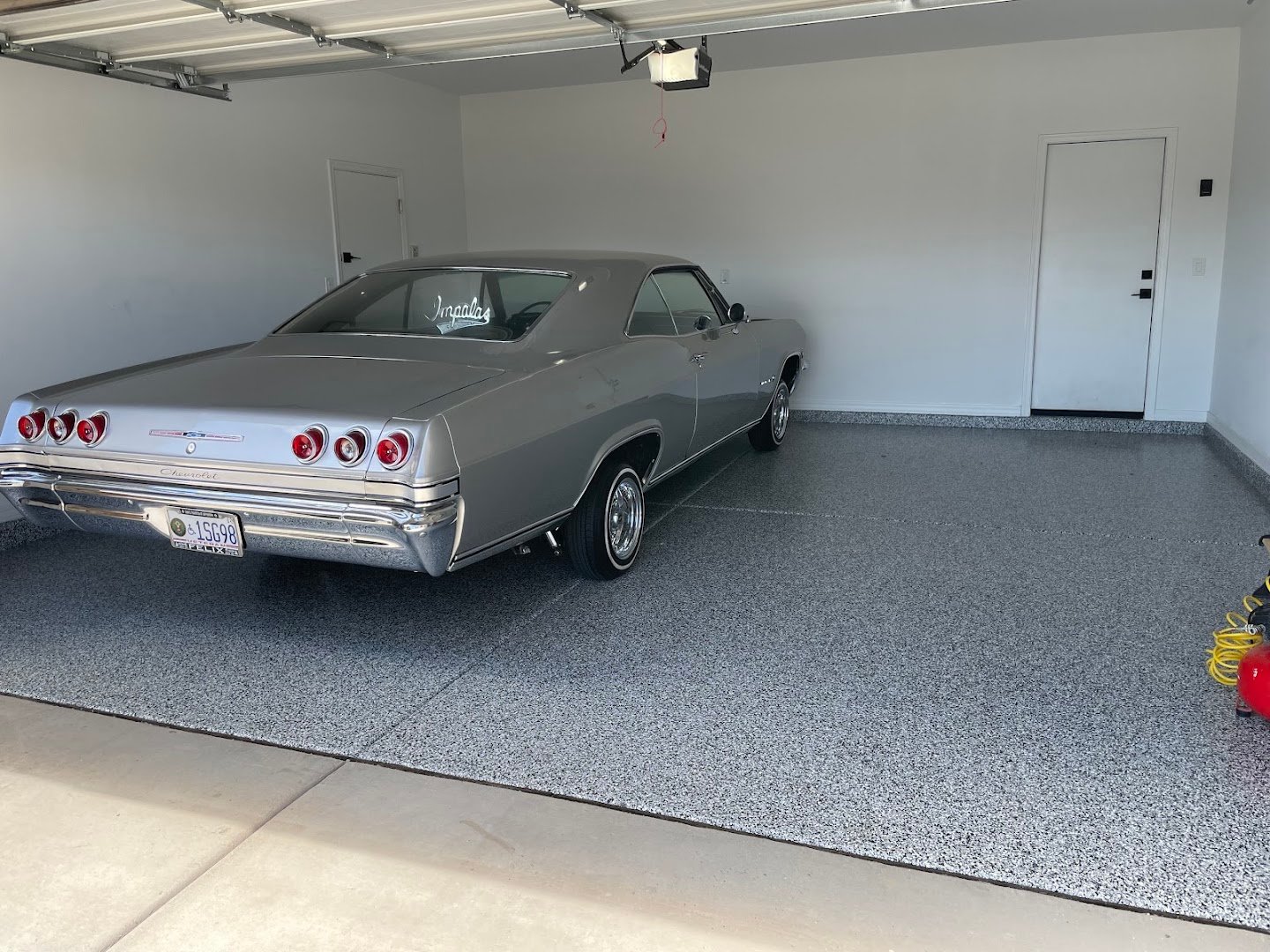
Epoxy is one of the most well-known concrete coatings and creates a thick, glossy surface. It's a common pick for garages because it holds up under everyday garage use.
Epoxy also comes in a wide range of colors and can be combined with decorative flakes for added texture. It's a solid choice if you want a budget-friendly finish that balances install cost with visual appeal.
Polyaspartic coatings
Polyaspartic coatings cure quickly — often in a single day. They're a common pick when install speed matters and for outdoor Arizona applications where a fast-cure system is a scheduling advantage.
These coatings are also flexible, which is a design benefit for surfaces that expand and contract with day-to-night temperature swings. Choose polyaspartic if you want a fast install and don't mind paying a bit more.
Metallic finishes
Metallic coatings create a striking, three-dimensional look that mimics flowing water, marble, or lava. By blending metallic pigments into the coating, installers can craft unique patterns no two floors share.
These finishes work beautifully in showrooms, retail spaces, and modern homes. Choose a metallic finish if you want a high-end, eye-catching surface that doubles as a conversation piece.
Flake (chip) finishes
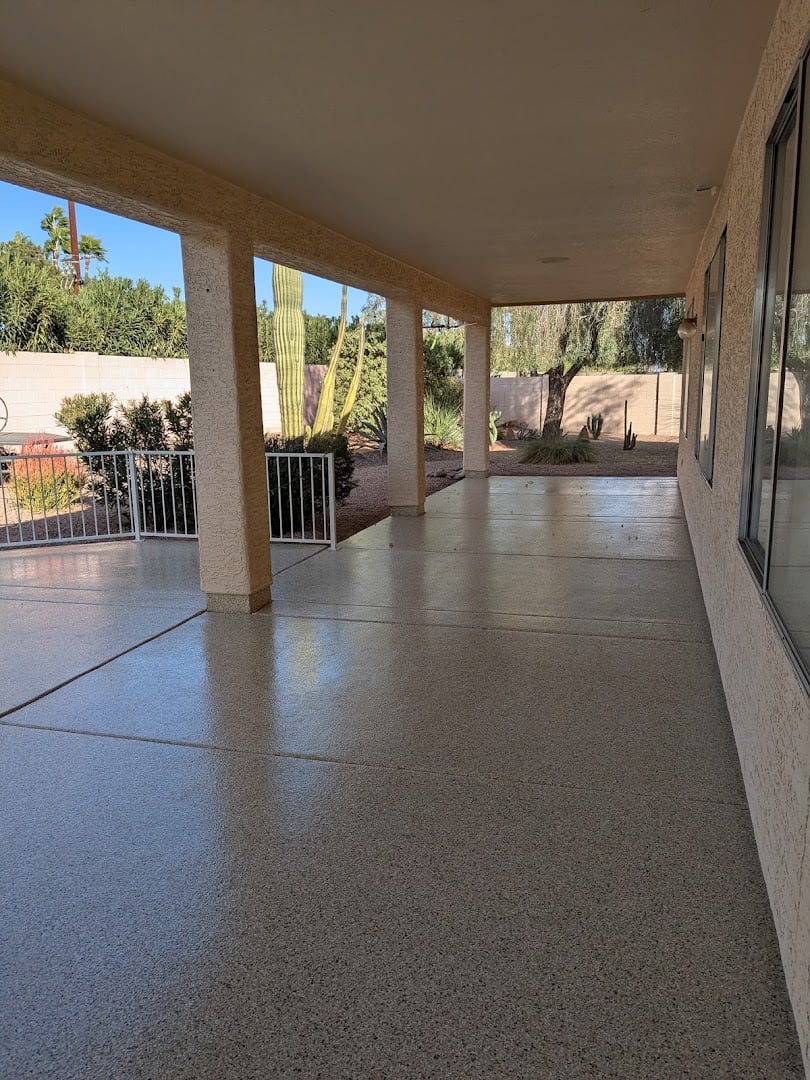
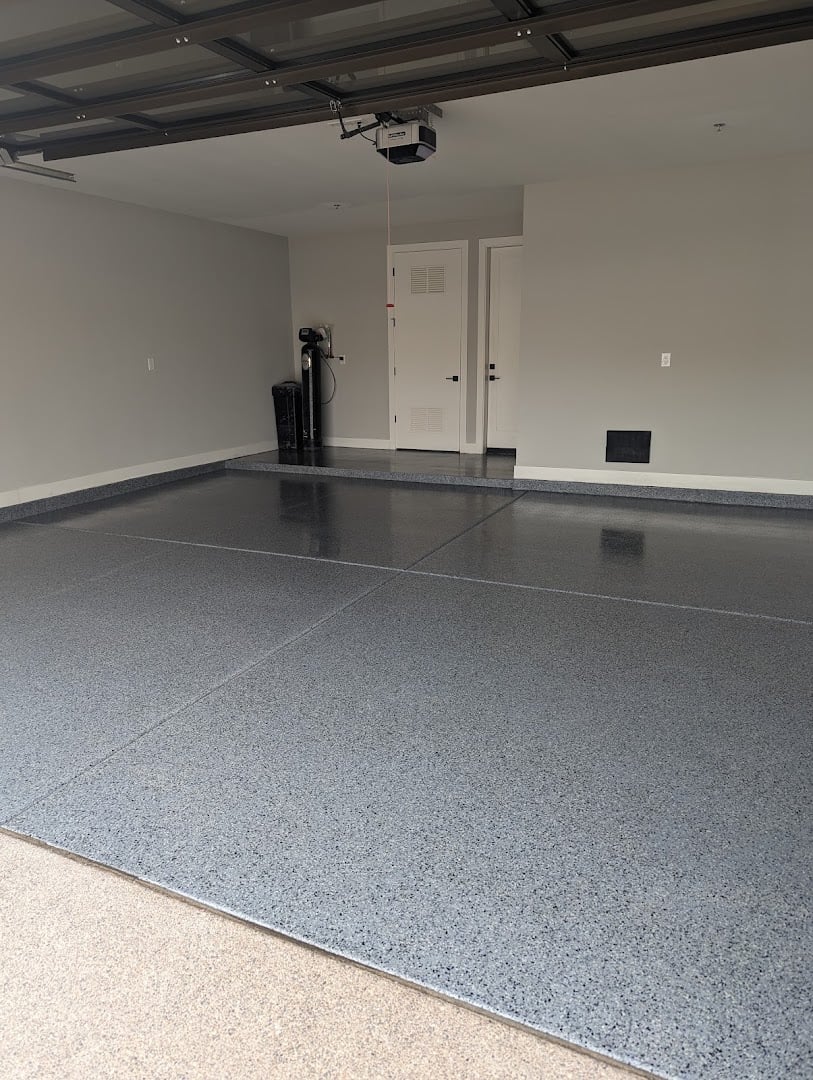
Flake finishes involve scattering colored vinyl chips over a base coat, then sealing them in. The result is a textured, speckled surface that hides dirt and minor imperfections while adding visual depth.
This style is popular in garages, basements, and commercial spaces. Choose a flake finish if you want a custom color blend with a forgiving day-to-day appearance.
Stained concrete
Stained concrete uses acid or water-based stains to add rich, translucent color directly to the slab. The result is an earthy, marbled look that feels natural and warm.
Stained concrete works well for patios, living areas, and entryways. Choose this style if you want a decorative finish that highlights the concrete's natural character.
How do I choose the right concrete coating finish?
The best finish depends on where you're using it and what matters most to you. Consider:
- Location: Garages and driveways see heavy vehicle and foot traffic — coatings like epoxy or polyaspartic are common picks. Patios and living spaces can showcase decorative options like metallic or stained finishes.
- Budget: Epoxy and flake finishes tend to be more affordable, while polyaspartic and metallic finishes cost more but offer added install speed or visual appeal.
- Maintenance: Flake finishes hide day-to-day dirt well and are forgiving, making them great for busy households.
A professional assessment can save you from costly mistakes. An experienced concrete coating company in Phoenix, AZ like Cardinal Concrete can walk through your space at the free in-home estimate and recommend the finish that fits your goals.
Why does professional installation matter?
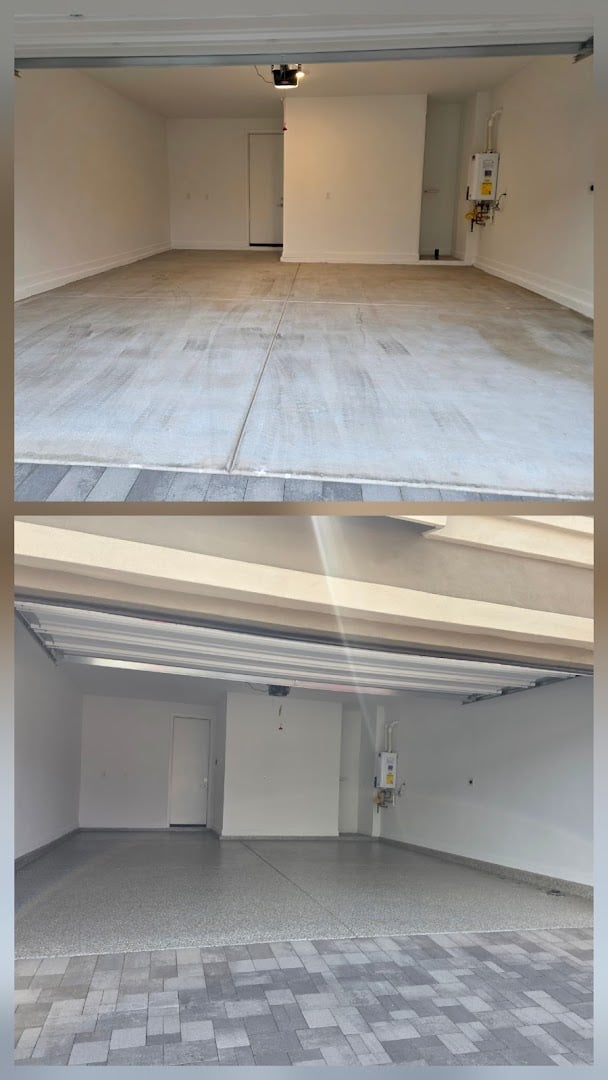
A concrete coating is only as good as its installation. Proper surface preparation — grinding, cleaning, and repairing the slab — is what lets a coating bond correctly. Skipping these steps often leads to peeling and bubbling.
Professional installers also understand how to apply coatings evenly and account for local conditions. In Phoenix, that means timing installation to avoid extreme temperatures during curing and choosing products suited to the environment.
Bring Your Concrete to Life
The right concrete coating finish can completely transform a space — boosting both look and everyday livability. From the utility of polyaspartic to the artistic flair of metallic finishes, there's an option for every style and budget.
If you're ready to upgrade your floors, Cardinal Concrete is here to help. As a concrete coating company in Phoenix, AZ, we'll walk you through the finish options at your free in-home estimate. Reach out today to schedule.
Frequently Asked Questions
How much does a concrete coating cost?
Costs vary based on the finish, square footage, and surface condition. Epoxy and flake finishes are generally the more affordable options, while polyaspartic and metallic finishes cost more. A professional quote gives you the most accurate estimate.
Can concrete coatings be applied outdoors in Phoenix?
Yes. We install coatings for driveways, patios, and pool areas across the Phoenix Valley. A professional installer can recommend the best option for your specific outdoor space at the estimate.
How long does it take to install a concrete coating?
Installation time depends on the finish and square footage. Polyaspartic coatings can wrap up in a single day; epoxy may take longer to fully cure. Surface preparation and the size of the area also affect the timeline.