
TL;DR: Maintaining your patio floor coating means seasonal cleaning, prompt spill removal, and avoiding harsh chemicals or sharp tools. Routine sweeping and occasional mopping with a pH-neutral cleaner is most of the job. For significant damage or resealing, consult Cardinal Concrete, your trusted Phoenix-area concrete coating contractor.
Key Takeaways:
- Sweep weekly and mop monthly using pH-neutral cleaning solutions to prevent dirt buildup and surface scratching.
- Adapt your maintenance routine to the seasons, focusing on debris removal in autumn and monsoon-season prep in summer.
- Avoid abrasive cleaning pads and highly acidic chemicals that can dull or deteriorate the coating.
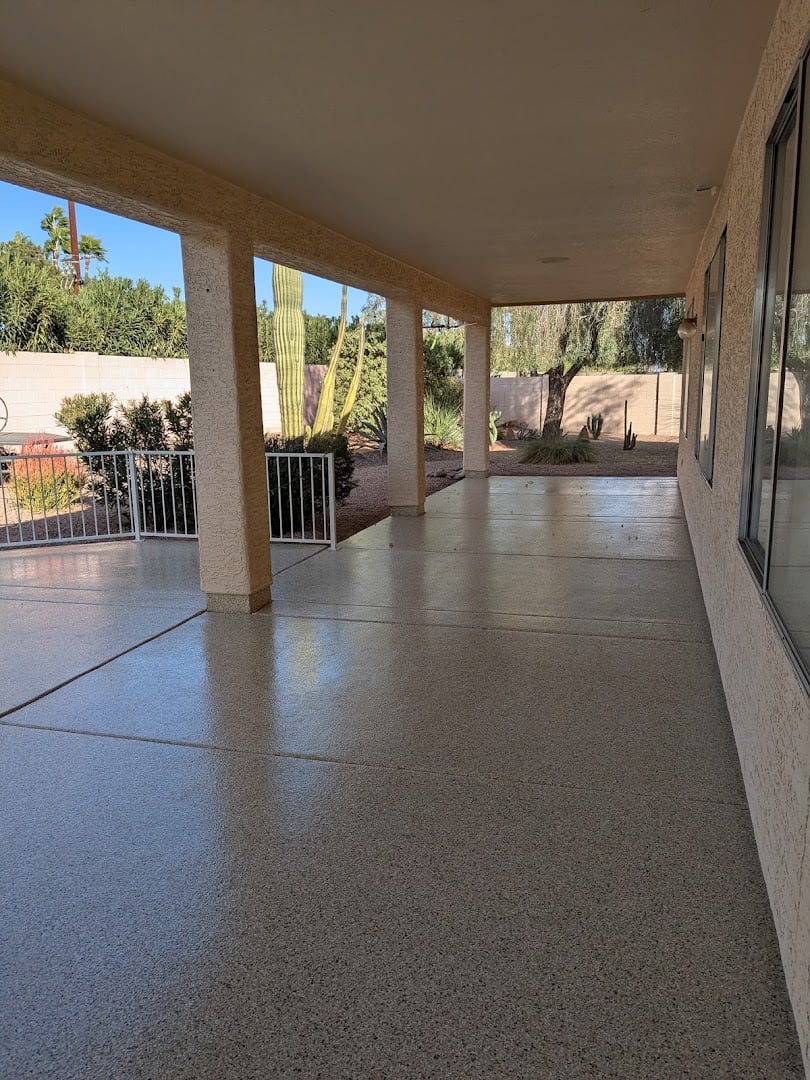
A well-cared-for patio floor coating turns an ordinary outdoor space into a stunning extension of your home. However, exposure to sunlight, temperature swings, and foot traffic all challenge the surface over time. Without proper care, even the best-installed polyaspartic or epoxy systems can lose their shine, develop micro-abrasions, or stain.
Homeowners often invest significant resources into upgrading their outdoor areas, only to skip the upkeep. Understanding the specific maintenance requirements for different seasons helps your investment stay looking good for years. This guide details the steps needed to protect your outdoor surfaces, adapt to seasonal weather changes, and recognize when it's time to call a professional Patio Coating Company for assistance.
Why is regular patio floor coating maintenance important?
Consistent maintenance extends the useful life of your patio floor coating. Dirt, sand, and gravel act like fine sandpaper under the friction of shoes. Over time, these small particles wear on the protective topcoat, leading to a dull appearance. By sticking to a regular cleaning schedule, you eliminate these abrasive elements before they cause visible wear.
Outdoor spaces are also subjected to organic matter like leaves, pollen, and bird droppings. When organic materials decompose on a coated surface, they can release acidic compounds that can etch the coating. A proactive approach to cleaning keeps the sealant doing its job — protecting the concrete slab underneath.
How do you prepare your patio floor coating for spring?
Spring brings warmer weather and an influx of organic activity, making it a good time to reset your patio.
What is the best method for spring cleaning?
Begin by thoroughly sweeping the entire patio to remove any lingering debris. Once swept, use a gentle garden hose to rinse the surface. For the actual washing process, mix a pH-neutral cleaner with warm water. Avoid ammonia-based or highly acidic cleaners like vinegar, as these can affect the chemical bonds in epoxy and polyaspartic coatings. Use a soft-bristled push broom or a microfiber mop to agitate the dirt, then rinse the surface completely. Make sure the water drains away from the patio to prevent pooling, which can leave mineral deposits as the water evaporates.
How should you inspect for damage?
After the patio is completely dry, perform a visual inspection. Look for any hairline cracks, chipping, or areas where the coating appears to be lifting. Ground movement can occasionally lead to surface damage over time. If you notice structural issues or significant delamination, consult Cardinal Concrete. As a Phoenix-area concrete coating contractor, we can assess whether the damage calls for a localized repair or a more comprehensive recoating.
What are the best summer maintenance tips for patio coatings?
Summer is the peak season for outdoor entertaining, which means your patio will see heavy foot traffic, potential food spills, and Arizona sun.
What about outdoor rugs and furniture placement?
Consider using outdoor rugs or installing a pergola or retractable awning to provide shade. When choosing outdoor rugs, select those without rubber backings. Rubber can undergo a chemical reaction with certain patio floor coatings, leading to permanent discoloration known as plasticizer migration.
What is the correct way to handle summer spills and stains?
Barbecues and pool parties inevitably lead to spills. Mustard, wine, grease, and sunscreen can be stubborn if allowed to bake into the surface under the summer sun. Address spills promptly by wiping them up with a soft paper towel or cloth. For grease spots, a mild degreaser designed for coated concrete works best. Apply the degreaser, let it sit for five minutes, scrub gently with a soft nylon brush, and rinse thoroughly. Never use abrasive scrubbing pads or steel wool.
How should you protect your patio floor coating during monsoon season?
Phoenix's summer monsoons bring intense rain, blowing dust, and airborne debris — a very different challenge from the dry heat of early summer.
Why is prompt debris removal important?
Monsoon storms deposit fine dust and organic debris across every horizontal surface in the yard. Wet debris that sits on the patio can stain the coating over time, and dust-caked patios feel gritty underfoot. Sweep or blow off the patio after each monsoon storm to keep the surface clean.
How do you prevent mold and mildew growth?
Damp shaded corners are where mold and mildew tend to appear. If you notice green or black spots developing, create a solution of one part simple green (or similar eco-friendly, non-acidic cleaner) to three parts water. Scrub the affected area lightly and rinse.
How should you protect your patio floor coating in fall?
Fall in Phoenix brings falling leaves from ornamental trees, cooler nights, and more comfortable outdoor time — which means more everyday use.
Why is prompt leaf removal important?
Fallen leaves aren't just a visual nuisance; they release tannins as they get wet and decompose, and tannins can leave brown, rusty-looking stains on your patio. Make a habit of sweeping or using a leaf blower on your patio at least twice a week during the peak fall foliage season.
When should you contact a professional Patio Coating Company?
While diligent homeowner maintenance handles most patio care, some situations call for professional help.
How do you identify a coating problem?
If you notice areas where the coating is bubbling, peeling away from the concrete, or exhibiting deep structural cracks, routine cleaning won't solve the problem. Bubbling often indicates hydrostatic pressure — moisture trapped beneath the slab. Peeling usually suggests an issue with the original surface preparation.
Why choose Cardinal Concrete for maintenance and repair?
Attempting to patch a professional coating with store-bought epoxy kits usually results in an unsightly, mismatched finish. Professional contractors have the industrial grinding equipment to prepare the surface correctly and access to commercial-grade polyurea and polyaspartic materials. If you need an expert evaluation, Cardinal Concrete is a Phoenix-area concrete coating contractor equipped to restore your patio floor coating.
Secure the Look of Your Outdoor Living Space
Maintaining your patio floor coating year-round is a straightforward process when you align your cleaning habits with the changing seasons. By prioritizing routine sweeping, immediate spill cleanup, and avoiding abrasive tools and harsh chemicals, you protect the finish. When you treat your outdoor surfaces with care, they reward you with years of good-looking service. For deeper damage, lean on a reputable Patio Coating Company for the repair work.
Frequently Asked Questions (FAQ)
Can I use a pressure washer to clean my patio floor coating?
Yes, cautiously. Use a wide fan nozzle (at least 40 degrees) and keep the pressure below 1500 PSI. Maintain a distance of at least 12 inches from the surface to prevent the high-pressure water from lifting the coating or driving water beneath the edges.
What is the best cleaner to use on a daily or weekly basis?
For routine cleaning, a mixture of warm water and a small amount of mild dish soap or a dedicated pH-neutral floor cleaner is ideal. These solutions break down grease and dirt without harming the clear topcoat.
Are outdoor furniture legs safe for coated concrete?
Dragging heavy metal or wrought-iron furniture across the surface can eventually cause scuffs. Attach felt pads or specialized plastic glides to the bottom of all outdoor furniture legs to prevent that.